
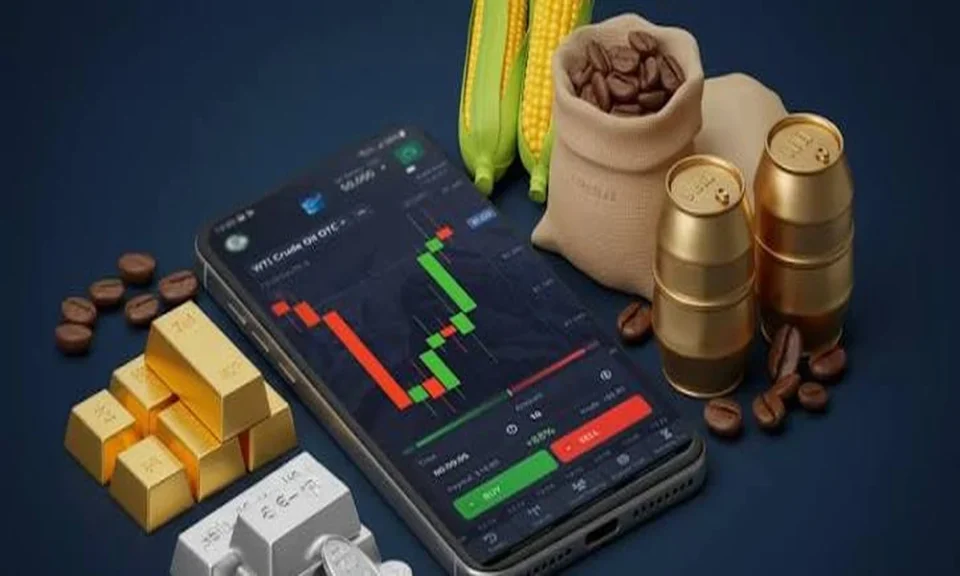
A Commodity Trading App can provide digital access to commodity-market information, charts, contracts, order placement, margin details, and position tracking. Unlike ordinary equity investing, commodity trading is often influenced by global supply and demand, currency movements, weather, geopolitical events, inventory levels, and futures-market conditions.
This makes commodity trading a specialised activity rather than simply another version of stock investing. The platform can make access easier, but traders still need to understand the underlying commodity, contract specifications, leverage, expiry, and potential price volatility before taking a position.
Commodity Markets Cover Very Different Assets
Commodities are not one uniform market.
Broad categories can include:
- Precious metals
- Energy products
- Base metals
- Agricultural commodities
Each category responds to different economic forces.
For example, precious metals may react strongly to interest-rate expectations and currency movements, while agricultural commodities can be affected by weather, crop conditions, and seasonal supply.
A trader should therefore understand the specific commodity rather than applying the same analysis to every contract.
Physical Demand Can Influence Market Direction
Commodity prices often reflect real-world demand.
Industrial metals may respond to:
- Manufacturing activity
- Infrastructure spending
- Construction demand
- Global economic growth
Energy prices can be affected by:
- Transportation demand
- Industrial consumption
- Production decisions
- Inventory levels
Understanding where demand comes from helps traders interpret why prices may be changing.
Supply Disruptions Can Move Prices Quickly
Commodity markets can react sharply when supply changes unexpectedly.
Possible causes include:
- Weather events
- Mine disruptions
- Production cuts
- Transportation problems
- Geopolitical tensions
A commodity with relatively stable demand can still experience a large price move if available supply falls suddenly.
This is one reason traders should avoid assuming historical price ranges will always remain stable.
Currency Movements Can Matter
Many globally traded commodities are priced in major international currencies.
Changes in currency values can therefore influence domestic commodity prices.
A trader may need to monitor:
- Global commodity price
- Currency movement
- Local market conditions
This creates an additional layer of analysis compared with securities driven mainly by company-specific fundamentals.
Futures Contracts Have Expiry Dates
Commodity trading commonly involves futures contracts.
These contracts have specific expiry dates.
Traders therefore need to know:
- Contract month
- Expiry date
- Lot size
- Price quotation
- Margin requirement
A trader who ignores expiry can unintentionally remain exposed to a contract for longer than planned.
A useful trading platform should make contract details easy to see before an order is submitted.
Lot Size Determines the Real Position Value
Commodity futures are generally traded in predefined contract sizes.
The quoted price alone may therefore understate the actual market exposure.
Before opening a position, traders should calculate:
- Contract value
- Required margin
- Potential loss from adverse movement
A relatively small price change can produce a significant rupee impact when multiplied across the full contract size.
Margin Makes Capital Efficient but Raises Risk
Futures trading often allows exposure using margin rather than paying the full contract value upfront.
This can make capital usage more efficient.
It can also magnify losses.
If a trader controls a large position using relatively little capital, a sharp adverse movement can quickly consume available margin.
Margin should therefore be considered a risk-management issue rather than merely a platform feature.
A Broader Trading Platform Can Help With Cross-Market Monitoring
A Broking App may allow users to monitor commodities alongside equities, indices, derivatives, and other supported market products.
This can make it easier to compare market conditions across asset classes, but users should avoid treating every product as if it behaves the same way.
Commodity prices can respond to macroeconomic and physical-market forces that may have little connection to individual company earnings.
Charts Can Help Identify Market Behaviour
Commodity traders may use charts to analyse:
- Trend direction
- Support and resistance
- Volume
- Momentum
Technical analysis can help organise entry and exit decisions.
However, chart patterns should not be separated from fundamental market drivers.
For example, a technical setup can change rapidly after:
- Inventory data
- Policy announcements
- Weather developments
- Geopolitical events
The chart provides market structure, while external developments can change that structure.
Inventory Data Can Affect Certain Commodities
For some commodities, inventory levels are closely watched.
Changes in available stocks can provide clues about supply-demand balance.
Rising inventories may suggest supply is exceeding current demand.
Falling inventories may indicate tighter market conditions.
However, inventory data should be interpreted with:
- Seasonal patterns
- Production trends
- Consumption changes
One data point rarely tells the complete story.
Seasonality Can Be Important
Some commodities follow recurring seasonal patterns.
Agricultural products may be influenced by:
- Planting periods
- Harvest cycles
- Weather seasons
Energy demand can also change at different times of year.
Seasonality can provide context, but it should not be treated as a guaranteed price pattern.
Unexpected supply or demand changes can override historical trends.
Global Events Can Create Overnight Risk
Commodity markets can react to international developments outside local trading hours.
Examples include:
- Geopolitical conflicts
- Central-bank decisions
- Production announcements
- Economic data
A trader holding an overnight position may therefore face a significant price gap when the domestic market reopens.
Position size should account for this possibility.
Stop-Losses Need Realistic Placement
Stop-loss orders can help define risk.
But placing them too close to the entry price can result in frequent exits during normal commodity volatility.
A trader should consider:
- Market volatility
- Contract size
- Maximum acceptable loss
The stop should fit the trading plan rather than being chosen randomly.
Position Size Matters More Than Trade Frequency
A trader can place relatively few trades and still take excessive risk if individual positions are too large.
Position size should reflect:
- Available capital
- Contract value
- Volatility
- Risk per trade
A disciplined trader focuses on the amount that can be lost if the trade fails, not only on the potential profit.
Hedging and Speculation Are Different Uses
Commodity derivatives can be used for different purposes.
A business exposed to changing commodity prices may use futures to manage price risk.
A trader may instead take positions to profit from expected price movements.
These objectives require different approaches.
Hedging focuses on reducing an existing economic risk.
Speculation deliberately takes market risk.
Users should know which activity they are engaging in.
Trading Costs Affect Short-Term Strategies
Frequent commodity trading can involve multiple transaction-related costs.
These may include:
- Brokerage
- Exchange charges
- Taxes
- Other applicable fees
Short-term strategies with small expected profits can be particularly sensitive to costs.
Performance should therefore be evaluated after charges rather than using gross trade results.
Platform Stability Is Important During Volatility
Commodity markets can move quickly after important announcements.
- Modify orders
- Exit positions
- Monitor margin
- Review prices
A platform should therefore be evaluated not only on design but also on reliability and position visibility.
Fast access is valuable only when the information displayed remains clear.
Alerts Can Help Track Important Levels
Traders may use alerts for:
- Price thresholds
- Contract expiry
- Margin changes
- Market events
Alerts can reduce the need to watch screens continuously.
However, too many notifications can encourage impulsive activity.
Only alerts connected to a defined trading plan are likely to be useful.
Commodity Exposure Should Be Kept Separate From Essential Savings
Commodity futures can be volatile and leveraged.
Capital needed for:
- Household expenses
- Emergency funds
- Loan repayments
- Near-term goals
should not be exposed casually to such risks.
Trading capital should be an amount the user can afford to place at risk without damaging essential financial commitments.
Different Commodities Need Different Research Inputs
A trader analysing gold may watch completely different variables from someone trading agricultural contracts.
This means there is no single universal commodity strategy.
Research should reflect:
- The asset
- Contract
- Market drivers
- Trading horizon
A useful app provides access to information, but the trader still needs to understand which information matters.
Complex Derivatives Need Additional Preparation
Before using Options linked to commodities or other underlying assets, traders should understand premium, strike price, expiry, volatility, and the potential effects of leverage.
Options can create defined-risk structures in some cases, but certain strategies can also involve substantial losses.
Access through a commodity platform should therefore come after product understanding, not before it.
Conclusion
A Commodity Trading App can make commodity-market access more convenient by combining prices, charts, contracts, margin information, orders, and position tracking in one interface.
The more important challenge is understanding the market itself. Commodity traders need to consider supply, demand, global events, currency movements, contract size, expiry, leverage, liquidity, and transaction costs before taking positions.
The strongest platform is one that makes these risks and contract details easier to see while allowing the trader to follow a disciplined approach.
FAQs
1. What is a Commodity Trading App?
A Commodity Trading App is a digital platform that provides access to supported commodity-market products, prices, charts, orders, and position information.
2. Why are commodity prices volatile?
Commodity prices can change because of supply disruptions, demand changes, currency movements, weather, geopolitical events, and global economic conditions.
3. What is margin in commodity trading?
Margin is the amount of capital required to open or maintain certain leveraged commodity positions. It allows exposure larger than the amount initially committed.
4. Why does contract expiry matter?
Commodity futures have defined expiry dates, so traders need to know when a contract ends and how their position will be handled as expiry approaches.
5. Are commodity futures suitable for every investor?
No. Commodity futures can involve leverage and significant volatility, so users should understand the risks and contract mechanics before trading.
